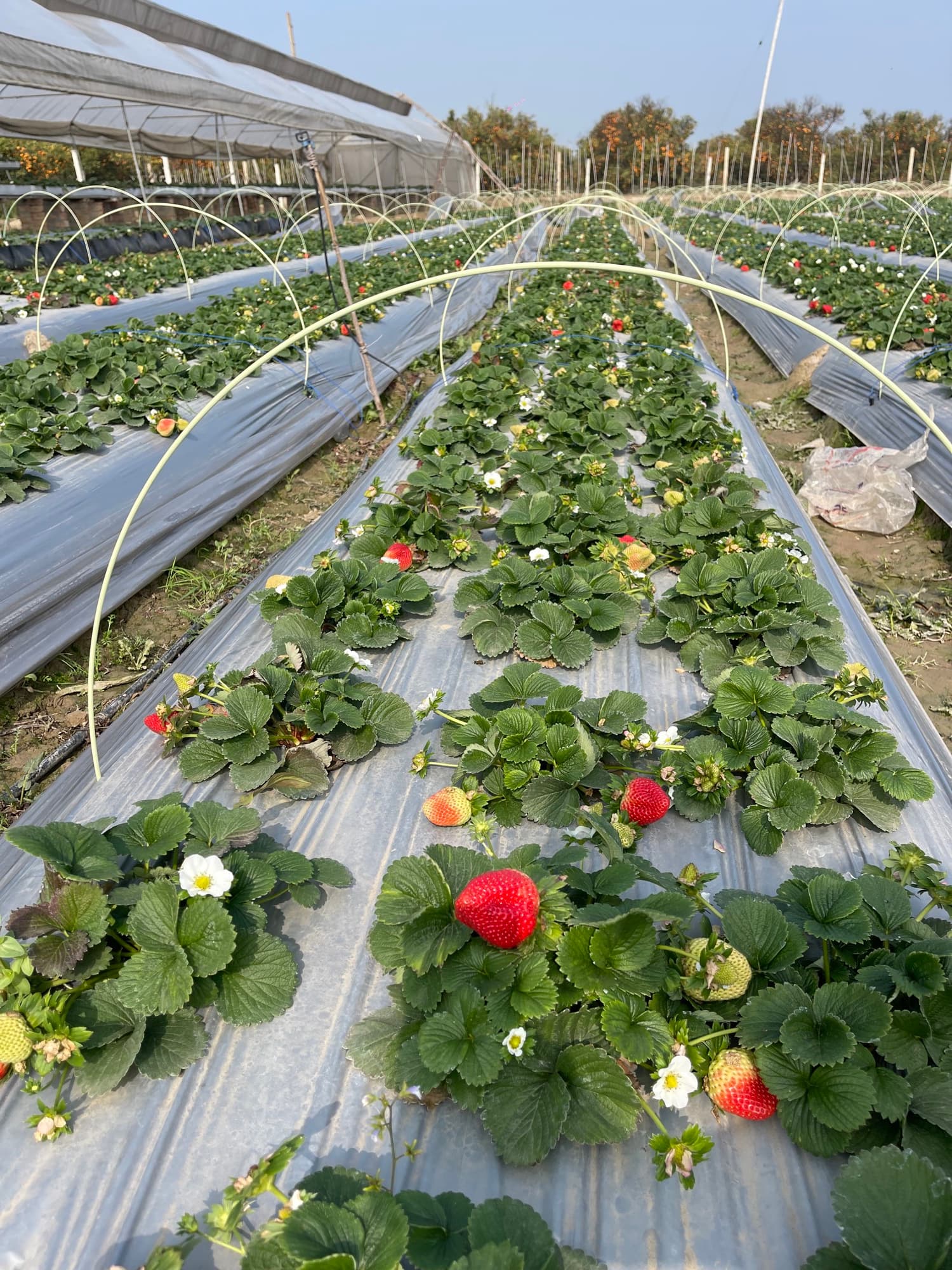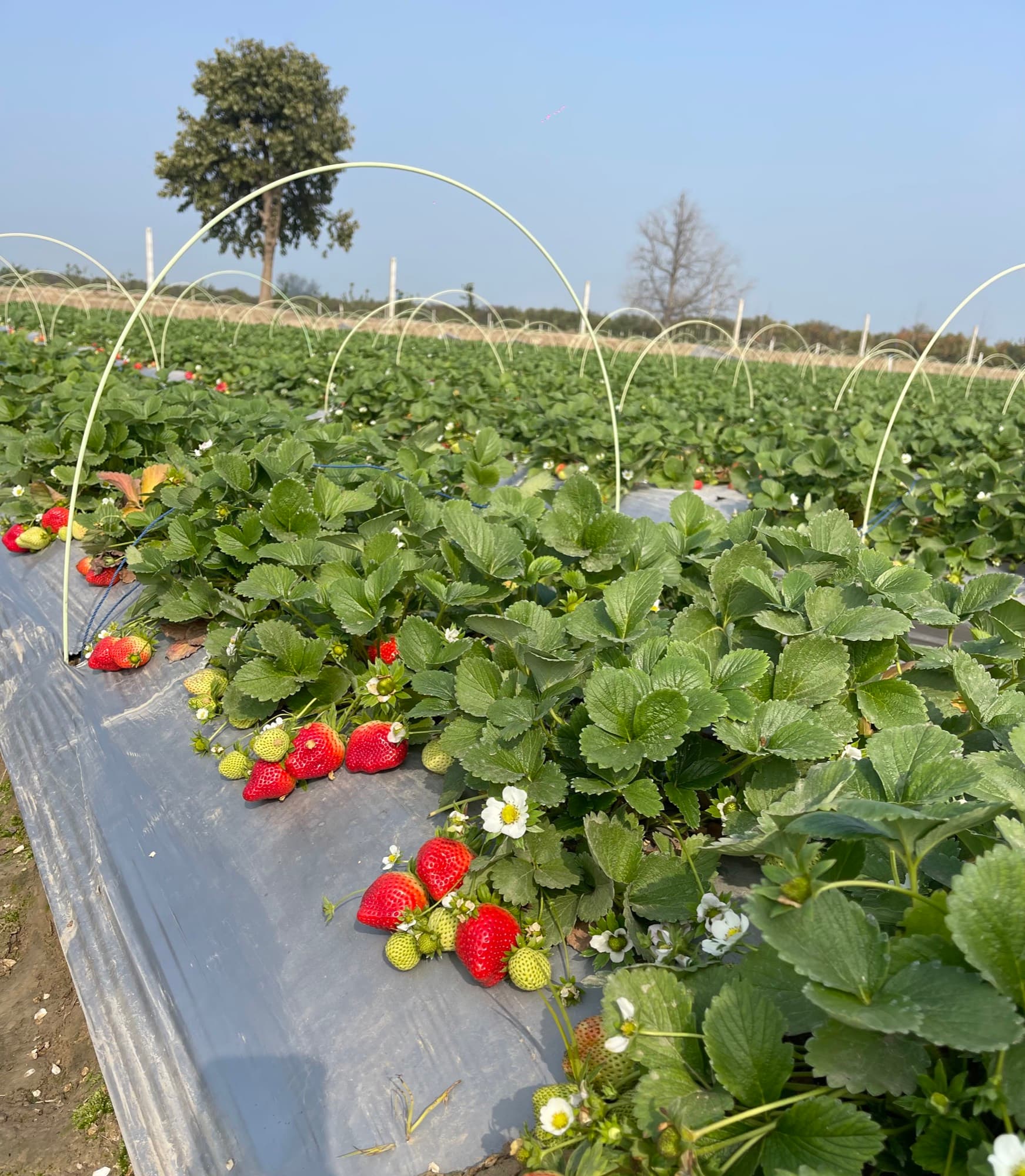
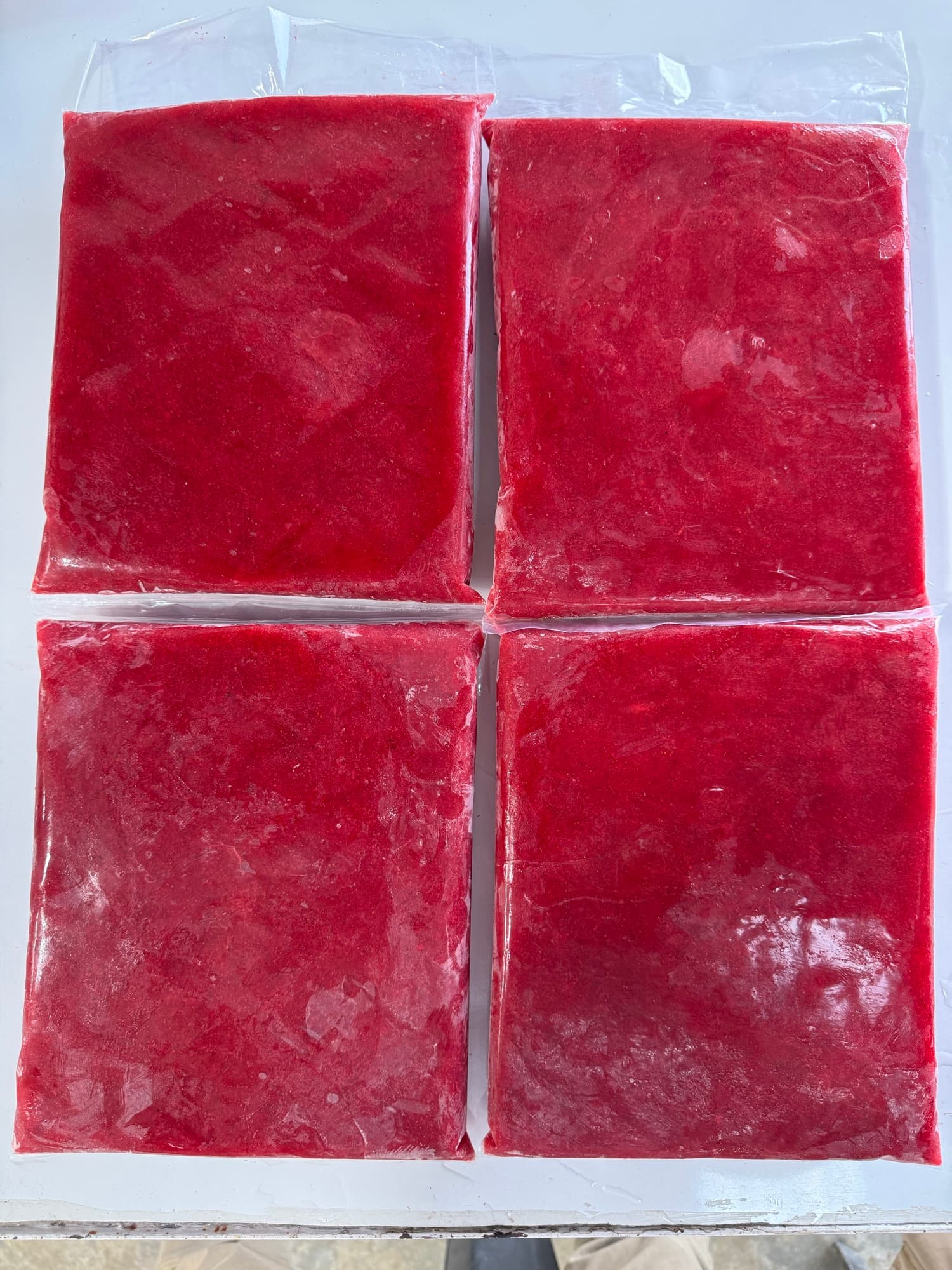
Fully ripened fruit, processed at peak freshness and frozen fast. What happens between the field and the −18°C store, and why it shows up in the finished product.
Strawberry pulp has a reputation for being a compromise — duller than fresh, flatter in flavour, browner in colour. That reputation is earned by pulp made badly. The two things that decide the outcome are how ripe the fruit was and how fast it got cold.
Start with fruit that was worth processing
A lot of pulp is made from whatever failed the fresh grade after sitting around for a few days. If the input was tired, no amount of careful processing will recover it.
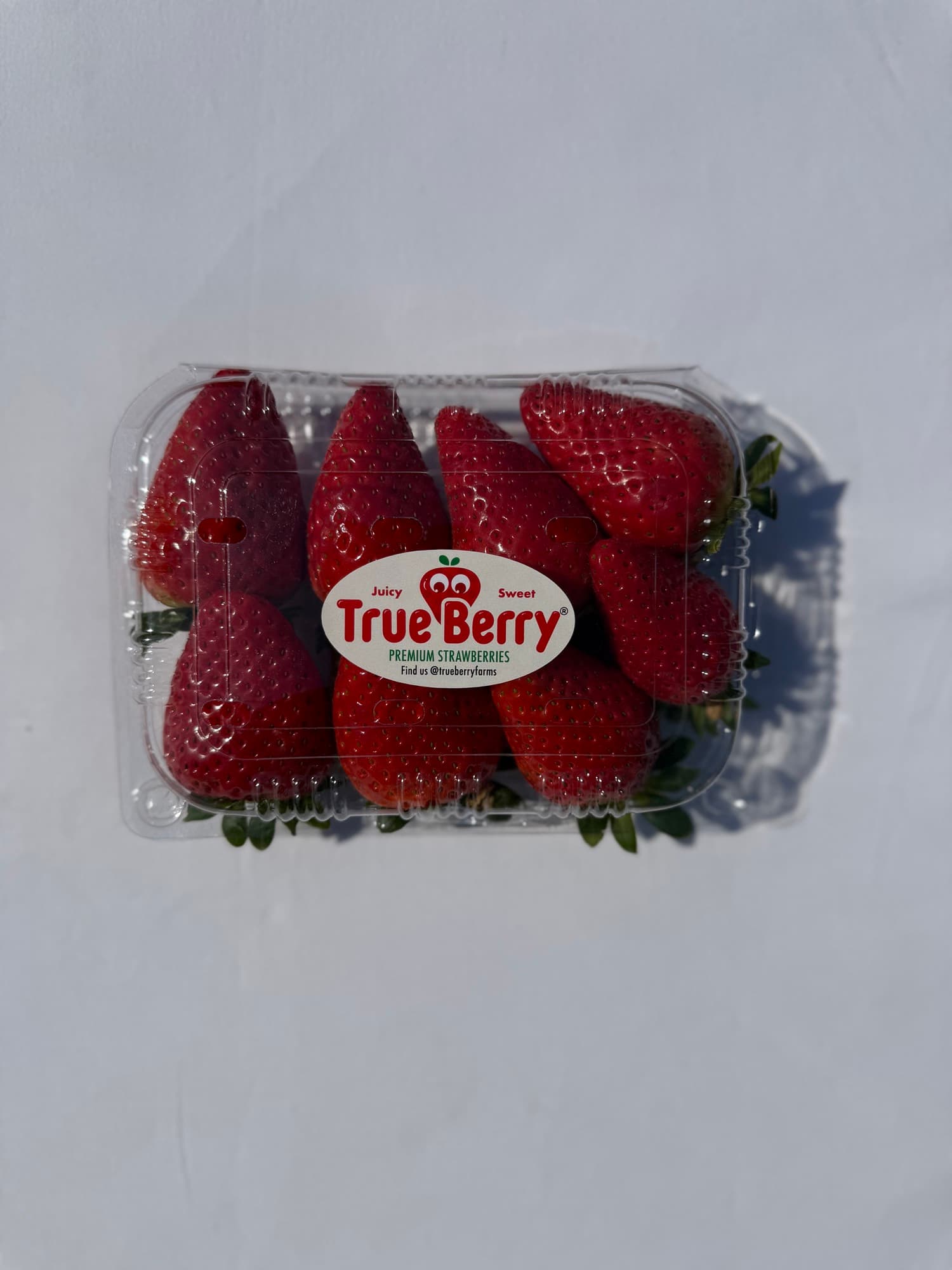
Ours is made from hand-selected, fully ripened fruit processed at peak freshness. Some of it is fruit that was graded out of trays for shape or size — perfectly good eating that simply did not present well in a punnet — and some is picked specifically for the pulp line, ripe and sweet, with no concern for firmness.
Colour is chemistry on a clock
The red in a strawberry comes from anthocyanins, and they are fragile. Heat degrades them, oxygen degrades them, and time at room temperature degrades them. Left alone, cut fruit shifts from bright red toward brown-red within hours.
The defence is simply speed. The shorter the interval between breaking the fruit and getting the pulp below freezing, the less of that reaction has a chance to run. Our pulp goes from ripe fruit to frozen block in a single continuous pass rather than being held between stages.
Why fast freezing matters, not just cold storage
Freezing rate changes ice crystal size. Freeze slowly and you grow large crystals that rupture cell walls; on thaw, that shows up as separation and a watery, washed-out texture. Freeze fast and the crystals stay small and the structure survives.
This is why cold storage temperature alone is a poor quality signal. Two pulps both stored at −18°C can behave completely differently on thaw depending on how quickly they got there in the first place.
Specification, and what it does not tell you
- Minimum 8.0 Brix — soluble solids, largely sugar.
- Maximum 1.1 acidity.
- Maximum 4.0 pH.
- Stored and shipped at −18°C or below.
- Available in 1 kg bags and 25 kg bulk buckets.
Those numbers are worth checking, but they will not distinguish good pulp from mediocre pulp. Two batches can hit the same Brix and pH and taste noticeably different, because Brix does not measure aroma and pH does not measure colour. The honest test is to thaw a sample and look at it: bright red rather than brown, minimal separation, and a clean fruit smell rather than a cooked one.