Trays, IQF bags, pulp, or concentrate. A practical guide for bakery, beverage, and dairy buyers on picking the format that matches your process and your shelf life.
Buyers new to sourcing strawberries at volume often start by asking for fresh fruit, because fresh sounds better. Frequently it is the wrong specification for what they are making, and it costs them on both price and consistency. Here is how the four formats actually differ.
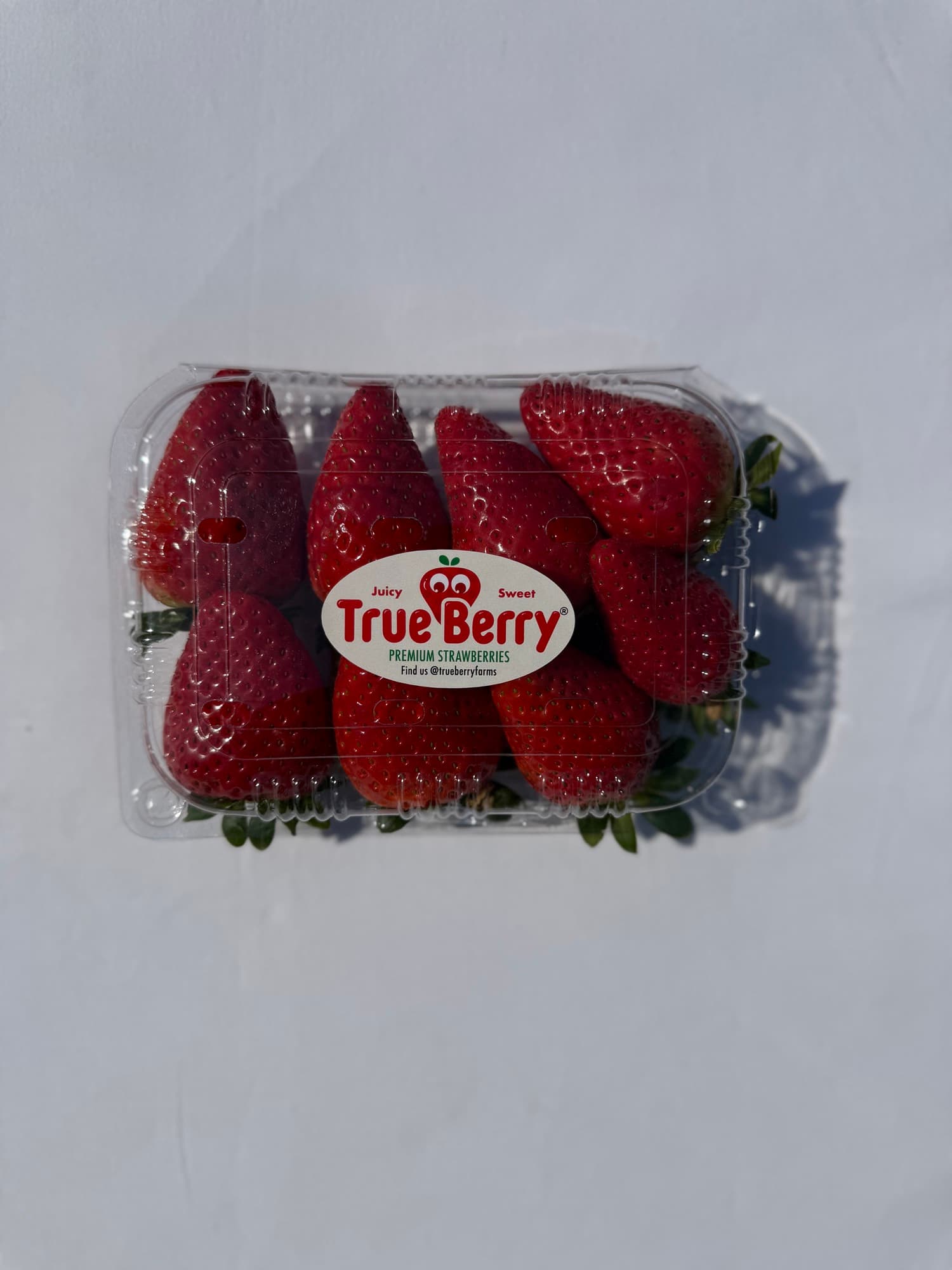
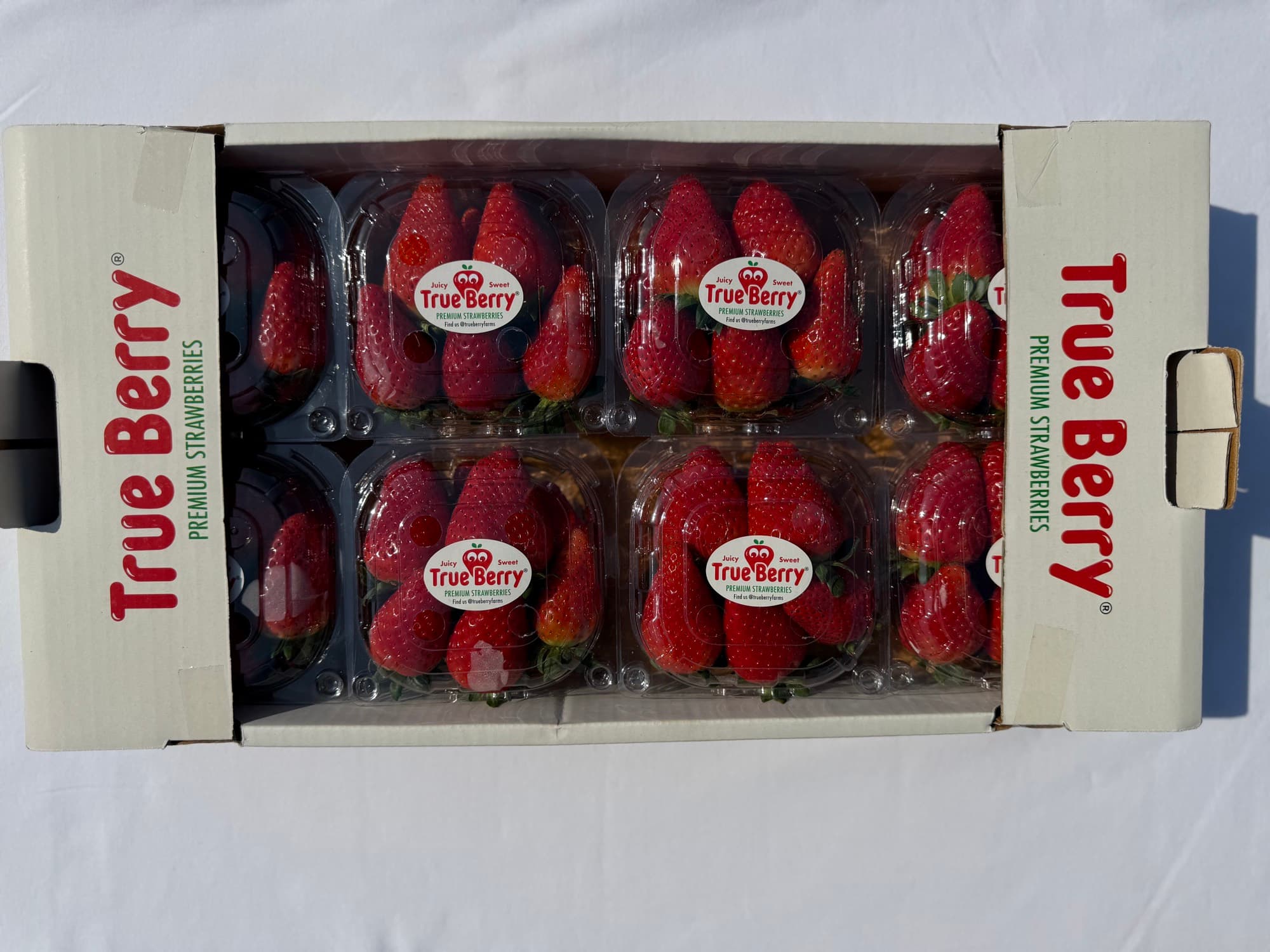
Fresh fruit — 2 kg and 1.9 kg trays
Whole graded berries in retail punnets, held chilled. This is the right call when the fruit is seen: retail sale, foodservice, garnish, anything where shape and appearance are the product.
The constraints are real. Fresh is seasonal, shelf life is measured in days, and it needs unbroken cold chain from us to you. If the fruit is going to be cut, cooked, blended, or frozen at your end, you are paying a premium for an appearance you are about to destroy.
Frozen whole fruit — 1 kg, 10 kg, and 20 kg HDPE bags
Picked at peak ripeness and frozen within hours, held at −18°C or below. Individual berries stay separate, so you can pour out exactly what you need and return the rest to the freezer.
This is the workhorse format for bakery inclusions, smoothie packs, and anything where you want visible pieces of fruit without seasonal constraints. Available year-round, and the flavour is closer to fresh than most buyers expect, because it was frozen ripe rather than picked early to survive shipping.
The 1 kg bag suits product development and small-batch work; 10 kg and 20 kg are the production sizes.
Frozen pulp — 1 kg bags and 25 kg bulk
Fully ripened fruit processed at peak freshness into a smooth pulp, then frozen. Our standard specification runs to a minimum 8.0 Brix, maximum 1.1 acidity, and a pH of no more than 4.0.
Pulp is the right choice when the fruit is going to be blended anyway — beverages, yoghurt, ice cream bases, jams, fillings, sauces. You are buying colour, flavour, and consistency without paying for cosmetic grading you would only blend away.
Pulp concentrate — industrial bulk
Pulp evaporated at low temperature to concentrate it, typically to 16–20 Brix, while retaining natural flavour, colour, and nutritive value. Low-temperature evaporation matters: aggressive heat gives you a cooked, jammy character that is difficult to design around.
Concentrate makes sense at scale, where freight and frozen storage per unit of fruit solids start to dominate your costs. You are shipping less water. It is also the format of choice when you need to hit a flavour intensity that whole pulp cannot reach without throwing off your recipe's water balance.
A rough decision rule
- The customer sees whole berries → fresh trays.
- You want visible fruit pieces, year-round → frozen whole fruit.
- The fruit gets blended, and you want a clean fruit character → frozen pulp.
- The fruit gets blended, at scale, and freight or water balance is a constraint → concentrate.
If you are genuinely unsure, the useful move is to request samples of two adjacent formats and run both through your actual process. Specifications on paper rarely settle it; a trial batch usually does within a day.